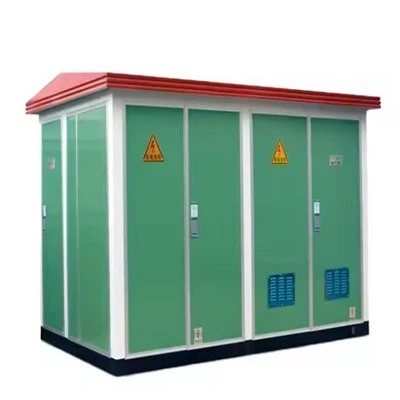

How much load can a 400kVA transformer handle? Learn how power factor, load type, operating conditions, and overload limits affect transformer sizing.
1. How Many Kilowatts Can a 400kVA Transformer Supply?
A 400kVA transformer is commonly used in industrial facilities, commercial buildings, small substations, and distribution networks. However, its actual load capacity is not a fixed number of kilowatts.
Some engineers estimate 320 kW, while others suggest 360 kW or even 400 kW. You may also encounter claims that a 400kVA transformer can supply 480 kW under overload conditions. Which figure is correct?
The answer depends primarily on the load's power factor and whether the transformer operates within its rated capacity.
For B2B buyers planning an electrical installation, understanding this relationship is essential for selecting a transformer that meets the site's power requirements without unnecessary investment or excessive operating risk.
2. How Power Factor Affects Transformer Load Capacity
A transformer's rated capacity is expressed in kilovolt-amperes (kVA), whereas the active power consumed by equipment is measured in kilowatts (kW).
The relationship is:
P (kW) = S (kVA) × PF
Where:
P is active power.
S is the transformer's apparent power rating.
PF is the power factor of the connected load.
For a 400kVA transformer, the available active power varies according to the load's power factor.
|
Power Factor |
Active Power |
Operating Status |
|
0.8 |
320 kW |
Within rated capacity |
|
0.9 |
360 kW |
Within rated capacity |
|
1.0 |
400 kW |
Within rated capacity |
These figures assume that the transformer operates at its rated apparent power of 400kVA and that the load is balanced under normal operating conditions.
For example, if an industrial facility has a power factor of 0.8, a 400kVA transformer can supply approximately 320 kW of active power at its rated capacity. If the power factor improves to 0.9, the available active power increases to 360 kW without increasing the transformer's kVA rating.
This is why transformer selection should consider both the facility's actual power demand and its power factor.
3. Why Different Loads Require Different Considerations
The type of equipment connected to a transformer affects its power factor, current demand, and operating characteristics.
Inductive loads: Motors, pumps, compressors, and many industrial machines require reactive power to establish magnetic fields. Their power factor is often below 1.0, meaning a transformer must supply more apparent power than the active power alone would suggest.
Resistive loads: Electric heating elements and incandescent lamps typically have power factors close to 1.0. Under these conditions, a 400 kVA transformer can theoretically supply approximately 400 kW at rated capacity.
However, not every heating or lighting installation has a power factor of exactly 1.0. Electronic lighting drivers, variable-frequency drives, and other power-electronic equipment can introduce reactive power or harmonic currents.
For projects with substantial motor loads, engineers should also account for motor starting current, simultaneous operation, and possible voltage drops. These factors can affect transformer sizing even when the calculated steady-state power demand appears acceptable.
4. Can a 400kVA Transformer Supply 480 kW?
A figure of 480 comes from multiplying the transformer's rated capacity by 1.2:
400kVA × 1.2 = 480kVA
This represents 120% of the rated apparent power, not automatically 480 kW of permissible active load.
If the power factor remains at 0.8, 480kVA corresponds to 384 kW. At a power factor of 0.9, it corresponds to 432 kW. At a power factor of 1.0, it corresponds to 480 kW.
Nevertheless, these calculations describe the power relationship, not an assurance that the transformer can safely operate at 120% of its rating.
Whether a transformer can tolerate temporary overload depends on its design, winding and insulation temperatures, ambient conditions, cooling system, previous loading, and overload duration. Dry-type and oil-immersed transformers may have different thermal characteristics, and the permissible overload must be verified against the manufacturer's instructions and applicable standards.
A transformer should not be specified for continuous 480 kW operation simply because a 1.2-times overload figure is mentioned. For continuous operation, the selected transformer must be adequately rated for the expected apparent power and site conditions.
5. How to Select the Right Transformer for an Industrial Project
For procurement teams, EPC contractors, and plant engineers, the selection process should begin with the facility's actual load profile rather than a single kW figure.
Before ordering a 400kVA distribution transformer, consider the following:
Total active power: Calculate the expected operating demand in kW, including the equipment likely to run simultaneously.
Power factor: Determine the expected power factor at the main supply point. Capacitor banks or other power-factor correction equipment may change the requirement.
Starting and fluctuating loads: Large motors, welding equipment, and other demanding loads may require additional engineering assessment.
Future expansion: Allow for planned increases in production capacity without automatically oversizing the transformer.
Installation conditions: Ambient temperature, altitude, ventilation, enclosure design, and cooling arrangements can affect usable capacity.
Voltage and phase requirements: Confirm the primary voltage, secondary voltage, frequency, three-phase or single-phase configuration, and required vector group.
For example, a factory with a maximum active demand of 320 kW and a power factor of 0.8 would require approximately 400kVA before allowing for design margin, future expansion, or special operating conditions. If the power factor falls below 0.8, the required apparent power will increase.
6. Transformer Solutions from Zhejiang Hengli Electrical
Zhejiang Hengli Electrical manufactures power transformers for industrial distribution, commercial facilities, infrastructure projects, and other electrical applications.
When evaluating a 400kVA transformer, buyers should confirm the rated voltage, insulation system, cooling method, efficiency requirements, installation environment, and applicable technical standards. The selection should also reflect the actual load profile rather than relying on nominal kW calculations alone.
Our team can assist buyers in reviewing project requirements and identifying a suitable transformer configuration. For an accurate quotation, provide the required primary and secondary voltages, frequency, load characteristics, installation conditions, and any applicable project specifications.
FAQ
1. Is a 400kVA transformer enough for a 320 kW load?
It can be sufficient if the load power factor is approximately 0.8 and the transformer operates within its rated capacity. The final selection should also account for operating conditions, starting loads, and design margin.
2. Can a 400kVA transformer supply 400 kW continuously?
At a power factor of 1.0, 400kVA corresponds to 400 kW. However, the actual load must maintain a power factor close to 1.0, and the transformer must remain within its rated operating limits.
3. Can a 400kVA transformer operate at 120% load?
Temporary overload may be permissible under specific conditions, but it is not universally guaranteed. Check the manufacturer's overload guidance and thermal limits before planning such operation.
4. Should I choose a larger transformer if my factory's power demand is close to 400 kW?
Not necessarily, but the decision requires careful calculation. At a power factor below 1.0, a 400kVA transformer cannot deliver 400 kW while remaining within its rated apparent power. A larger rating may be necessary, depending on the actual power factor, load profile, and required design margin.
Conclusion
A 400kVA transformer can supply 320 kW, 360 kW, or 400 kW under different power-factor conditions. A calculated figure of 480 kW is possible only under specific assumptions about power factor and overload, and it should not be treated as a general continuous operating rating.
For industrial and commercial projects, the right transformer size depends on apparent power demand, power factor, load characteristics, installation conditions, and future requirements. A properly selected transformer helps maintain reliable power distribution while avoiding unnecessary capital costs and premature insulation ageing.