
Learn how a Buchholz relay works in oil-immersed transformers, including gas accumulation, oil leakage detection, alarm signals, and automatic tripping protection.

What Is a Buchholz Relay?
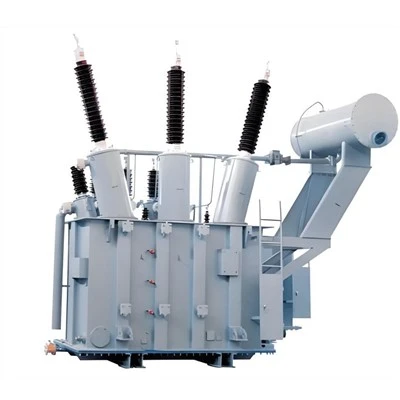
A Buchholz relay is a mechanical protection device used in many oil-immersed transformers equipped with a conservator tank. Installed in the connecting pipe between the main transformer tank and the conservator, it detects certain internal faults by monitoring gas accumulation and abnormal oil movement.
Although its structure is relatively simple, the Buchholz relay plays an important role in transformer protection. It can provide an early warning of developing faults and initiate a trip signal when a serious internal fault causes rapid oil movement. This helps maintenance teams respond before a minor problem develops into extensive equipment damage.
For utility companies, industrial facilities, and EPC contractors, understanding how this device works is an important part of evaluating transformer protection arrangements.
Why Does a Transformer Need a Buchholz Relay?
An oil-immersed power transformer relies on insulating oil for two essential functions: electrical insulation and heat transfer. The oil absorbs heat generated by the core and windings and helps carry it away from critical components.
Over time, abnormal operating conditions such as localized overheating, insulation deterioration, electrical arcing, or internal short circuits may damage the transformer. Some of these faults decompose the insulating oil and solid insulation, generating gases inside the tank.
If the fault continues, the resulting damage may become expensive to repair and could lead to an extended shutdown.
A Buchholz relay helps detect certain developing faults by collecting the generated gas and responding to abnormal oil flow. However, it is not a universal detector for every transformer fault. Its effectiveness depends on the fault type, relay design, installation, and operating conditions.
How Does a Buchholz Relay Work?
A conventional Buchholz relay contains float mechanisms, magnetic elements, and electrical contacts housed inside a sealed chamber. Depending on the design, it may also incorporate a baffle or a separate mechanism that responds to rapid oil flow.
Its operation can be understood through three common situations.
1. Gas Accumulation Triggers an Alarm
When a developing internal fault causes oil or solid insulation to decompose, gas may gradually accumulate in the relay chamber.
As the gas volume increases, the oil level inside the chamber falls. The upper float moves accordingly and activates its switching mechanism, sending an alarm signal to the transformer monitoring or control system.
This alarm indicates that further investigation is necessary. Maintenance personnel can collect the accumulated gas for analysis, where appropriate, and use the results alongside dissolved gas analysis (DGA), oil tests, and other diagnostic information to assess the condition of the transformer.
2. Low Oil Level May Trigger an Alarm or Trip
Oil leakage can reduce the oil level in the transformer and its associated oil system. If the oil level inside the Buchholz relay falls sufficiently, the float mechanism may operate.
Depending on the relay design and the severity of the condition, this can generate an alarm or a trip signal. The exact response depends on the device's switching arrangement.
A falling oil level should not automatically be interpreted as proof of an internal electrical fault. Maintenance teams need to identify the cause, check the oil level and investigate any leakage before returning the transformer to normal service.
3. Rapid Oil Movement Can Initiate a Trip
A severe internal fault, such as an electrical arc, can generate gas rapidly and cause a sudden pressure increase and movement of oil toward the conservator.
The rapid oil movement acts on the relay's flow-sensitive mechanism, which activates the trip contact. The protection system then sends a signal to the associated circuit breaker to disconnect the transformer.
This function is commonly called heavy-gas or Buchholz trip protection, although the trip mechanism responds primarily to rapid oil flow rather than simply to the quantity of accumulated gas.
By initiating disconnection, the relay can help limit further damage. It does not guarantee that an explosion or equipment failure will be prevented, so correct protection coordination remains essential.
What Makes the Buchholz Relay Different From Electronic Sensors?
One practical advantage of a conventional Buchholz relay is that its main sensing mechanism is mechanical. Floats and flow-sensitive components respond directly to changes in gas volume, oil level, or oil movement without requiring a digital processor to detect those physical changes.
The relay still uses electrical contacts to transmit alarm and trip signals, and the wider protection system may include electronic monitoring and circuit-breaker controls.
For transformer operators, the key benefits include:
Early fault indication: Gas accumulation can reveal certain developing internal problems before they cause a major outage.
Direct mechanical response: The device responds to physical changes within the oil circuit.
Gas sampling capability: Collected gas can provide useful diagnostic evidence when analyzed correctly.
Integration with protection systems: Alarm and trip contacts can be connected to the substation control and protection scheme.
The relay should be treated as one part of a coordinated protection system, alongside devices such as pressure-relief equipment, temperature indicators, electrical differential protection, and other safeguards selected for the transformer design.
Installation and Maintenance Considerations
For a Buchholz relay to operate reliably, correct installation and routine inspection are essential.
The relay must be installed in the designated connecting pipe between the main tank and the conservator, following the manufacturer's instructions. Pipe configuration, relay orientation, oil-flow direction, and specified mounting slope must comply with the applicable design requirements. A universal installation angle should not be assumed for every model.
During commissioning and maintenance, technicians should verify the following:
Correct relay orientation and oil-flow direction.
Secure pipe and flange connections without oil leakage.
Proper operation of alarm and trip contacts.
Correct wiring to the control and protection system.
Suitable gas-release and sampling arrangements.
Compliance with the relay manufacturer's testing and maintenance instructions.
Unexplained gas accumulation, repeated alarms, or unexpected trip operations should be investigated rather than dismissed as nuisance signals.
Choosing Transformer Protection for Your Project
When purchasing an oil-immersed transformer, buyers should confirm whether a Buchholz relay is included in the proposed protection configuration or available as an option. This is particularly important for transformers equipped with a conservator, where the relay can provide valuable protection against certain internal faults.
The selection should consider the transformer rating, tank and conservator arrangement, protection philosophy, applicable standards, and project specifications. Not every oil-immersed transformer uses the same tank design or requires the same accessories.
At Zhejiang Hengli Electrical, transformer protection arrangements can be discussed during the technical specification stage to help align the proposed equipment with the application and project requirements. Buyers should confirm the final accessory list, wiring requirements, and protection functions before ordering.
Frequently Asked Questions
Q1: Is a Buchholz relay used in every oil-immersed transformer?
No. It is commonly used in conservator-type oil-immersed transformers. Sealed-tank transformers and other designs may use different protection arrangements.
Q2: What is the difference between a Buchholz alarm and a trip?
An alarm commonly responds to gradual gas accumulation or certain oil-level changes. A trip commonly responds to rapid oil movement associated with a severe internal fault. The exact functions depend on the relay design.
Q3: Can a Buchholz relay identify the exact transformer fault?
No. It indicates that a condition requiring investigation has occurred. Gas analysis, dissolved gas analysis, electrical tests, and other diagnostic methods may be needed to identify the cause.
Q4: Does a Buchholz relay replace other transformer protection devices?
No. It complements other protection functions, such as differential protection, overcurrent protection, temperature monitoring, and pressure-relief devices. The complete arrangement should be designed according to the transformer's specifications and operating requirements.
Conclusion
The Buchholz relay is a well-established protection device for many conservator-type oil-immersed transformers. By detecting gas accumulation and abnormal oil movement, it helps identify certain internal faults and initiate timely alarm or trip actions.
For transformer buyers, checking the relay configuration is not simply an accessory-list exercise. It is part of ensuring that the selected transformer has a protection arrangement suited to its operating environment, maintenance strategy, and project requirements.