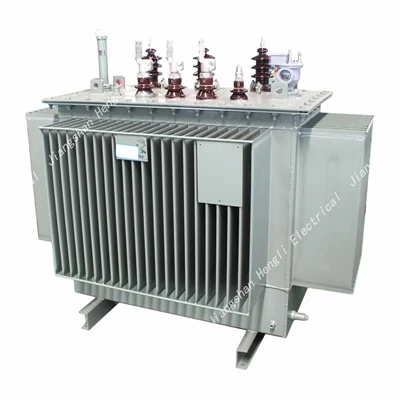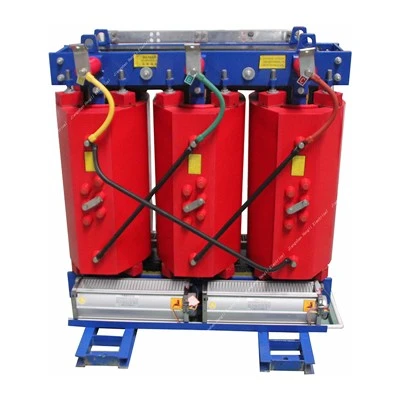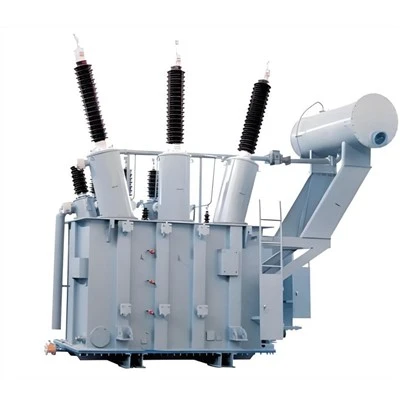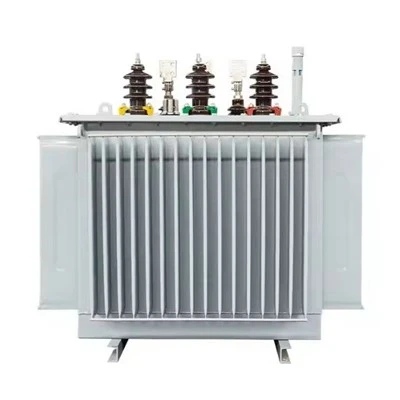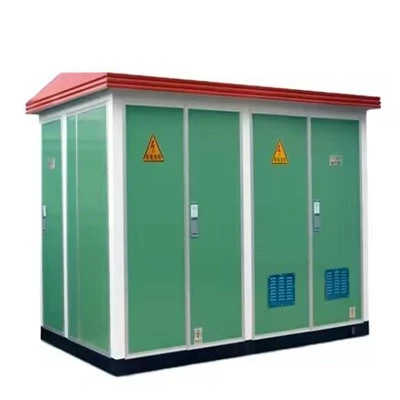

The fundamental principle of a special transformer is essentially electromagnetic induction: alternating current generates alternating magnetic flux in the primary winding, which in turn induces a voltage in the secondary winding, thus achieving the transfer and transformation of electrical energy. The difference lies in the fact that a special transformer, based on this fundamental principle, is "customized" to adapt voltage, current, frequency, or waveform according to different operating conditions.
When alternating current is applied to the primary side, an alternating magnetic field is formed in the iron core. This magnetic flux passes through the secondary winding, inducing a corresponding voltage. By adjusting the winding turns ratio, step-up, step-down, or special voltage outputs can be achieved. For special types such as rectifier transformers and furnace transformers, the effects of current distortion, harmonics, and nonlinear loads on the magnetic field are also considered to ensure stable operation even in complex electromagnetic environments.
The "specialness" of a special transformer lies not in the principle itself, but in its engineering extension. For example, in high-frequency transformers, it is necessary to reduce eddy currents and skin effects; in high-current transformers, it is necessary to enhance heat dissipation and short-circuit withstand capability; and in test transformers, high insulation levels and stable output capability are emphasized. Therefore, they are all electrical devices based on electromagnetic induction, which are adapted to different application scenarios through structural, material and parameter optimization.