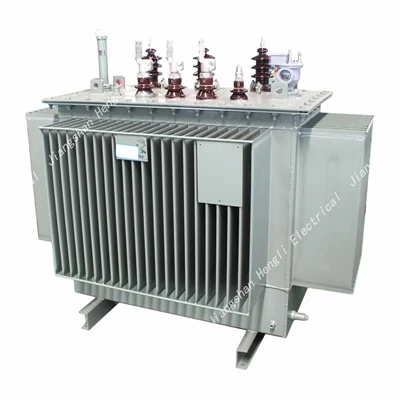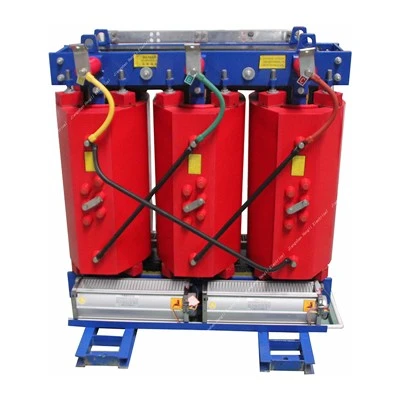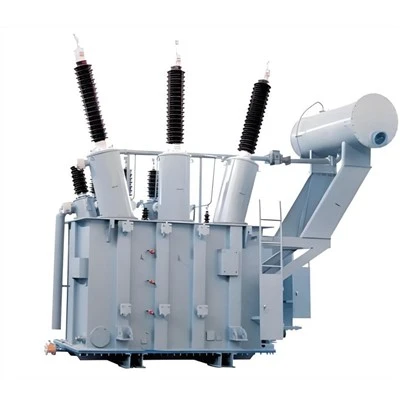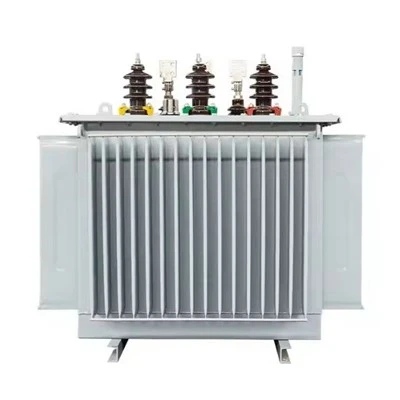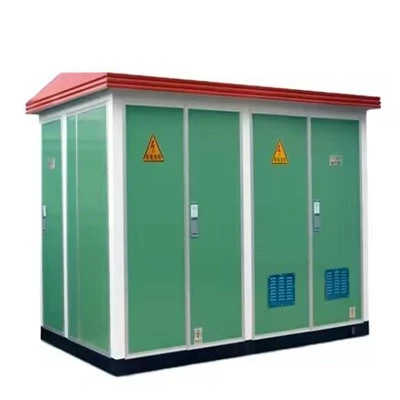

The core working principle of a power transformer's main transformer is electromagnetic induction, using a magnetic field to achieve voltage increases/decreases and energy transfer. Its basic idea is to utilize alternating current to generate a changing magnetic flux in one winding, which in turn induces a voltage in another winding.
When alternating current flows into the high-voltage winding of the main transformer, it generates an alternating magnetic field in the iron core. This magnetic field is transmitted through the iron core to the low-voltage winding, inducing an electromotive force (EMF) and achieving voltage conversion. The turns ratio of the high-voltage and low-voltage windings determines the ratio of the output voltage to the input voltage; this is commonly referred to as the turns ratio. In other words, the side with more turns has a higher voltage, and the side with fewer turns has a lower voltage.
Besides voltage conversion, the main transformer also performs the functions of power transmission and isolation. It allows for the safe connection of power grids of different voltage levels while blocking DC current and some fault currents, protecting downstream equipment. The efficiency of the main transformer is very high, typically above 98%, but a small amount of copper and iron losses still occur during operation. Therefore, a cooling system is needed to maintain temperature stability and ensure reliable operation over a long period.