
Transformer losses are an important consideration when selecting a power transformer, especially for industrial facilities, substations, commercial buildings and renewable energy projects that operate continuously for many years.
A transformer does not convert electrical energy with 100% efficiency. Even when no load is connected, it consumes a small amount of power. When the transformer supplies a load, additional losses occur and increase with the load current.
For a basic transformer loss calculation, two parameters are essential: no-load loss and load loss.
What Are No-Load Loss and Load Loss?
No-load loss, also called core loss or iron loss, is the power consumed by the transformer core when the transformer is energized but supplying little or no load. It is mainly associated with hysteresis and eddy-current losses in the magnetic core.
For a given transformer, no-load loss is relatively stable during normal operation. This means the transformer consumes this energy even when downstream equipment is not operating.
Load loss, commonly associated with copper loss, occurs when current flows through the transformer windings. Because the windings have electrical resistance, power is dissipated as heat. Load loss changes with the square of the load current.
Therefore, if the load changes, the actual load loss also changes.
Basic Transformer Loss Calculation Formula
The total transformer loss can be expressed in simple terms as:
Total Loss = No-Load Loss + Load Loss
For a transformer operating at a load ratio of x:
Load Loss at x load = Rated Load Loss × x²
For example, if a transformer operates at 50% of its rated load:
Load Loss = Rated Load Loss × 0.5² = 25% of rated load loss
This is an important point for buyers. The load-loss value listed on a transformer datasheet normally refers to the loss measured at the specified rated current, not the loss under every operating condition.
Example: Monthly Loss of a 250kVA Transformer
Consider a 250kVA three-phase transformer with the following example values:
Rated capacity: 250kVA
No-load loss: 230 W
Rated load loss: 2,300 W
Operating time: 24 hours/day
Operating period: 30 days
There are:
24 × 30 = 720 operating hours per month
1. No-Load Energy Loss
Convert 230 W to 0.23 kW:
0.23 kW × 720 h = 165.6 kWh
Therefore, the transformer would consume approximately 166 kWh of no-load energy per month, even if it remained energized without supplying a significant load.
2. Load Loss at Full Load
The rated load loss is 2.3 kW.
At 100% load:
2.3 kW × 720 h = 1,656 kWh
So, under continuous full-load operation, the theoretical monthly load-loss energy would be approximately 1,656 kWh.
The total calculated loss would therefore be:
165.6 + 1,656 = 1,821.6 kWh/month
However, this is a theoretical full-load example. In a real installation, transformer loading changes throughout the day, so actual monthly load loss is normally different.
Why Actual Transformer Loss Is Often Lower
Most transformers do not operate continuously at 100% rated capacity. A factory, commercial building or solar project may experience significant changes in electrical demand during the day.
For example, if a transformer operates at an average load of 60%, the load-loss component is approximately:
0.6² = 36%
of its rated load loss, assuming the simplified calculation and stable conditions.
This illustrates why load profile is just as important as the rated load-loss figure when estimating annual energy consumption.
For long-term operating cost analysis, buyers should therefore consider the transformer's no-load loss, load loss, expected loading profile and annual operating hours together.
Do Transformer Type and Core Material Affect Losses?
Yes. Transformer design and material selection have a direct influence on energy performance.
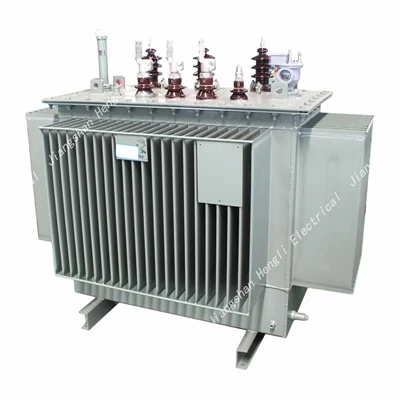
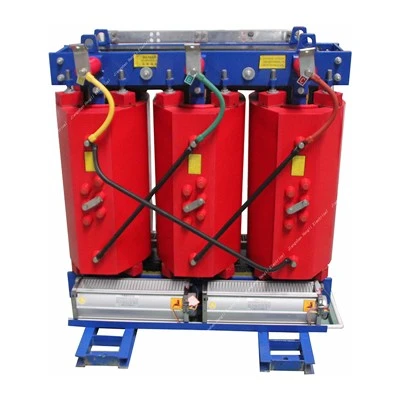
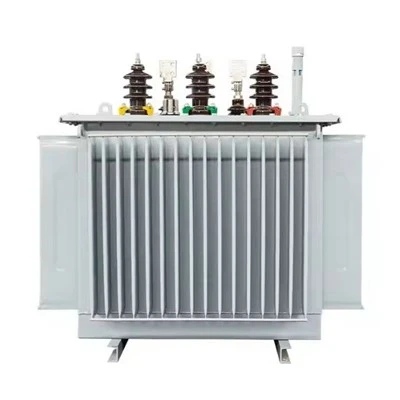
Oil-immersed and dry-type transformers can have different loss characteristics because of differences in core, winding, insulation and cooling design. It is therefore not sufficient to compare transformers only by capacity or physical size.
Core material also matters. Transformers using amorphous metal cores can achieve substantially lower no-load losses than conventional silicon-steel core designs under appropriate designs and operating conditions.
For buyers comparing different transformer quotations, the most useful approach is to compare the actual guaranteed no-load loss and load loss values in the technical datasheets rather than assuming that one transformer type will always have lower total losses.
How Transformer Loss Affects Purchasing Cost
A transformer with a lower purchase price is not necessarily the lowest-cost option over its service life.
For a transformer operating thousands of hours every year, even a relatively small difference in no-load or load loss can accumulate into significant energy consumption.
A practical transformer procurement evaluation should therefore consider:
Rated capacity
No-load loss
Load loss
Expected annual loading
Annual operating hours
Electricity cost
Transformer service life
Applicable energy-efficiency requirements
This approach gives EPC contractors, distributors and industrial users a more realistic basis for comparing transformer quotations.
What Should Buyers Ask the Transformer Manufacturer?
Before placing an order, it is useful to request the manufacturer's guaranteed loss values and clarify the test conditions. Buyers should check whether the quoted losses correspond to the required capacity, voltage ratio, connection group and applicable standard.
At Zhejiang Hengli Electrical, transformer configurations can be developed according to project requirements, including capacity, voltage ratio, winding material, core design and energy-efficiency targets. For a specific project, customers can provide the rated capacity, primary and secondary voltage, expected load profile and applicable standard so that the transformer design can be evaluated according to actual operating conditions.
FAQ
Q:Does a transformer consume electricity when there is no load?
A:Yes. Once energized, the transformer has no-load loss associated mainly with the magnetic core.
Q:Does transformer load loss remain constant?
A:No. Load loss changes with winding current and is approximately proportional to the square of the load current under the simplified calculation.
Q:Which is more important, no-load loss or load loss?
A:Both matter, but their importance depends on the operating profile. Transformers that remain energized for long periods with relatively low loading may place greater emphasis on no-load loss, while heavily loaded transformers can accumulate significant load losses.
Q:Can transformer losses be reduced?
A:Yes. Appropriate core materials, winding design, manufacturing quality and energy-efficiency-oriented transformer designs can reduce losses. Correct transformer sizing is also important because an oversized or poorly matched transformer may operate inefficiently for its actual load profile.
Final Takeaway
Transformer loss calculation is not simply a matter of looking at one number on a datasheet. No-load loss occurs whenever the transformer is energized, while load loss changes with the actual current flowing through the windings.
For an accurate energy-cost estimate, buyers should combine the manufacturer's guaranteed loss data with the project's expected loading pattern and operating hours. This provides a much more useful basis for transformer selection than comparing purchase price alone.