
Practical Energy-Saving Solutions for Step-Up and Step Down Distribution Transformers
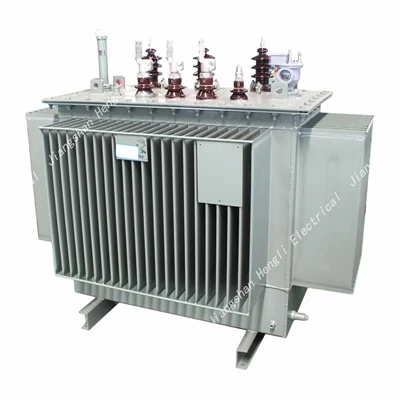
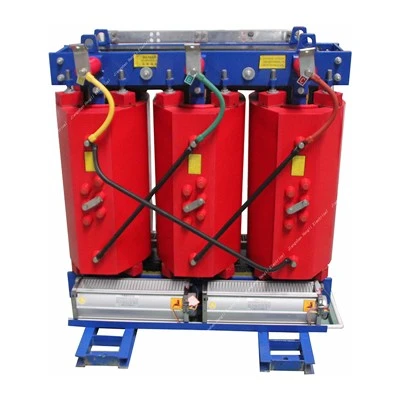
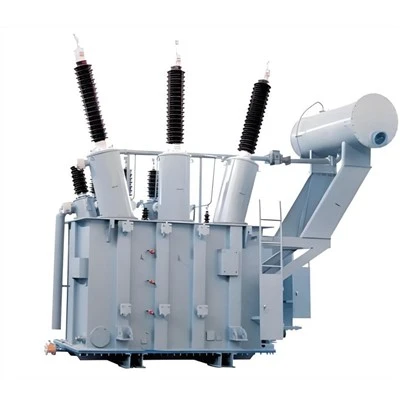
Many facility managers and electrical operators often face a common issue: larger capacity transformers tend to consume more standby and operating power, leading to rising operational costs over time. It is a widespread misconception that transformer energy loss is unavoidable. In fact, targeted optimization and reasonable equipment selection can effectively cut unnecessary power waste, whether you deploy 3 phase step down and step up distribution transformer units for grid voltage conversion or conventional distribution transformers for industrial sites.
To implement effective energy-saving measures, it is essential to first understand the source of transformer energy consumption. Both step down distribution transformer and step-up models rely on winding and core structures for voltage conversion. Their operating losses mainly consist of load loss and core loss, while minor dielectric and stray losses are generally negligible in daily operation. Load loss, also known as copper loss, occurs when current flows through copper or aluminum windings. It increases exponentially with rising load current, meaning larger transformers with heavier operational loads generate far more winding heat and energy waste.

Core loss, or iron loss, remains relatively stable once the transformer is energized, regardless of real-time load conditions. Caused by hysteresis and eddy current flux changes inside silicon steel cores, this fixed standby loss is the main reason why traditional transformers waste power even during idle periods. For factories running transformers 24/7, long-term core loss accumulates into substantial electricity costs, which is often overlooked in routine equipment management.
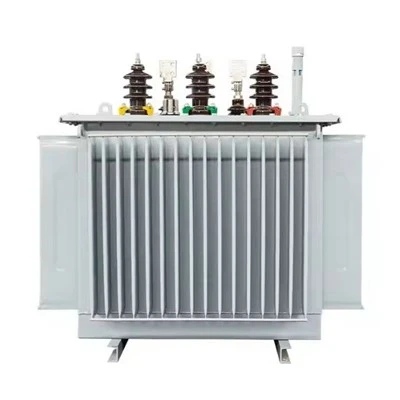
The most efficient and reliable solution to reduce fixed core loss is upgrading to an amorphous distribution transformer. Verified by multiple power industry field tests and material performance studies, amorphous alloy core materials feature a unique non-crystalline structure, ultra-thin ribbon thickness and high resistivity. These properties greatly suppress hysteresis and eddy current generation, cutting no-load losses by nearly 50% compared with traditional silicon steel core transformers of the same capacity. This makes the amorphous distribution transformer the preferred energy-saving model for long-term continuous operation scenarios.
Apart from material upgrading, scientific capacity matching is another practical energy-saving strategy. Operational experience shows that the optimal load rate for distribution transformers ranges from 40% to 80%. Operating step up distribution transformers or step down distribution transformer within this interval balances load loss and core loss perfectly, avoiding low-load idle waste or overload excessive power consumption.
For enterprises still using aging traditional transformers, replacement decisions require comprehensive tech-economic evaluation. Although upgrading to high-efficiency amorphous distribution transformer involves initial procurement and installation costs, the long-term savings from reduced power loss and lower maintenance expenses can fully offset the investment. At Zhejiang Hengli Electrical, we always recommend customized energy-saving schemes rather than blind upgrades, helping clients achieve stable operation and long-term cost reduction.