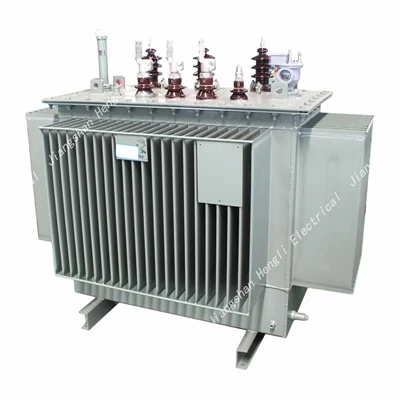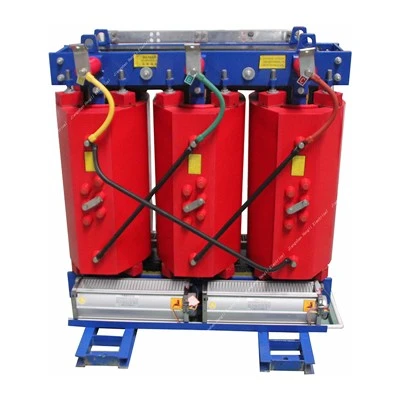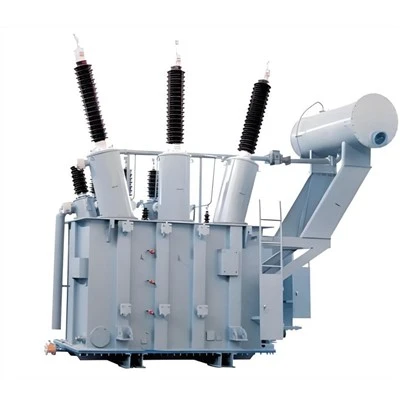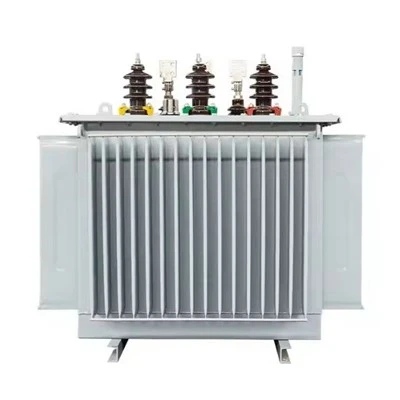

Two power transformers may operate under similar loads and in the same grid, yet one can run reliably for more than a decade while the other suffers a serious failure unexpectedly.
The difference is often not simply the transformer itself. Daily inspection and early fault detection play a major role in transformer service life.
For utilities, industrial plants, commercial facilities, and other power users, a transformer failure can mean much more than equipment replacement. An unexpected outage may interrupt production, affect downstream electrical equipment, and create significant maintenance and downtime costs.
However, transformer inspection is sometimes reduced to checking the oil temperature gauge and walking around the equipment. That approach can miss early warning signs.
For oil-immersed power transformers, experienced maintenance technicians often follow five basic actions:
Look, Listen, Smell, Touch, and Measure.
Each one can reveal information that a single temperature reading cannot provide.
1. Look: Start With the Transformer Exterior
A visual inspection should go beyond checking whether the transformer is running.
Check the radiator and enclosure
Outdoor transformers are constantly exposed to dust, rain, humidity, and industrial contaminants. Dust and oil deposits can accumulate on radiator surfaces and reduce heat dissipation.
Poor heat dissipation means higher operating temperatures, especially when the transformer is heavily loaded.
Contaminated surfaces can also become more vulnerable to surface leakage and flashover under humid conditions. This is particularly important for transformers installed in coastal areas, industrial environments, or locations with high dust levels.
Look for:
Excessive dust or oil contamination
Corrosion on the tank or radiator
Damaged radiator fins
Abnormal discoloration
Signs of oil leakage
Loose or damaged external components
Regular cleaning and inspection can help maintain effective heat dissipation and reduce environmental risks.
2. Pay Special Attention to High-Voltage Bushings
Transformer bushings are critical insulation components and should receive careful visual inspection.
Check the bushing surface for:
Cracks or mechanical damage
Carbonized or blackened marks
Signs of tracking or flashover
Oil leakage around the bushing
Contamination and heavy dust deposits
A small crack may not immediately cause a visible problem under dry conditions. However, when humidity increases, moisture can reduce surface insulation performance and increase the risk of partial discharge or flashover.
For this reason, bushing inspection should not be limited to a quick glance from a distance. When conditions permit, technicians should inspect the bushing surface and connection area closely.
3. Check the Conservator and Transformer Oil
For oil-immersed transformers equipped with a conservator, the oil tank, flanges, welds, valves, and connections should be checked for leakage.
Oil leakage is more than an external housekeeping problem.
Transformer oil provides both insulation and cooling. When oil escapes and air enters the system, moisture can gradually affect the insulation system and reduce dielectric performance.
Watch the oil appearance
Normal transformer oil is generally clear and relatively bright in appearance. If the oil becomes unusually dark, cloudy, or contaminated, it may indicate overheating, oxidation, contamination, or other internal problems.
In such cases, visual inspection alone is not enough. An oil sample should be taken for laboratory testing according to the maintenance procedure.
Depending on the transformer and operating condition, oil analysis may include tests such as dielectric strength, moisture content, acidity, and dissolved gas analysis (DGA).
Check the oil level
Oil level should also be considered together with ambient temperature.
Oil expands as its temperature increases and contracts when the temperature decreases. Therefore, a normal oil level cannot be judged without considering the transformer's design, oil temperature, ambient conditions, and the indication range specified by the manufacturer.
A significant deviation from the expected level can indicate leakage, abnormal temperature conditions, or an indication problem.
4. Oil Temperature Is More Than Just a Number
The top-oil temperature gauge is one of the most frequently observed instruments during transformer inspection.
But simply asking, "Is the temperature high?" is not always enough.
The more useful question is:
"Is the temperature normal for this load and this ambient condition?"
For example, a higher oil temperature on a hot summer day may be completely normal. On the other hand, if the transformer operates under a similar load and similar ambient temperature but suddenly develops a noticeably higher top-oil temperature than its historical operating level, further investigation may be necessary.
Possible causes can include:
Increased load
Poor cooling performance
Blocked or contaminated radiators
Abnormal winding losses
Internal hot spots
Cooling equipment problems
The exact acceptable temperature range should always be determined according to the transformer design, rated parameters, applicable standards, and manufacturer's specifications rather than applying one universal limit to every transformer.
For long-term maintenance, trend monitoring is often more valuable than a single temperature reading.
5. Listen: Changes in Transformer Sound Can Be an Early Warning
A normally energized transformer usually produces a relatively steady humming sound caused mainly by electromagnetic forces and magnetostriction in the core.
The sound should be familiar to the maintenance team.
A sudden change is more important than the absolute sound level.
Technicians should pay attention to:
Irregular humming
New rattling or buzzing sounds
Crackling or discharge-like sounds
Mechanical vibration
A noticeable change from the transformer's normal operating sound
Abnormal noise may be associated with loose components, core vibration, mechanical problems, winding deformation, or electrical discharge.
Sound inspection does not replace electrical testing, but it can provide an early indication that further investigation is needed.
6. Inspect Cable and Bushing Connections for Overheating
High-current connections are another common inspection point.
If a cable lug, terminal, or bushing connection is improperly tightened or has poor contact, contact resistance can increase. Under high current, even a relatively small increase in resistance can generate significant heat.
Over time, the connection may become discolored, oxidized, or severely overheated. In extreme cases, the conductor or terminal can fail and contribute to a short circuit or fire.
A visual inspection may not always reveal early-stage overheating.
Use infrared thermography when appropriate
Infrared cameras or thermal imaging equipment can help identify abnormal temperature differences at:
Cable terminals
Bushing connections
Busbar joints
Switchgear connections
Other high-current electrical contacts
For critical installations, thermal inspection can be incorporated into periodic preventive maintenance rather than waiting until visible damage appears.
7. Never Ignore the Pressure Relief Device
The pressure relief device is an important mechanical protection component on many oil-immersed transformers.
If a serious internal fault occurs, rapid gas generation and oil pressure rise can occur inside the transformer tank. The pressure relief device is designed to release excessive pressure and help protect the tank from dangerous overpressure.
During routine inspection, technicians should check whether:
The device is physically intact
There are signs of oil leakage
The indicating mechanism has operated
The membrane or related components show abnormal damage
If the pressure relief device has operated, the transformer should not simply be returned to service without determining the cause.
An operated pressure relief device may indicate a serious internal event and requires appropriate inspection and testing before re-energization.
8. Check the Buchholz Relay on Conservator-Type Transformers
For applicable oil-immersed transformers with a conservator, the Buchholz relay is an important non-electrical protection device.
The valve arrangement between the conservator and Buchholz relay should be in the correct operating position according to the manufacturer's design and operating procedure. After maintenance work, technicians should pay particular attention to whether valves have been restored to their normal operating position.
A closed valve can prevent the protection system from functioning as intended.
The relay chamber should also be properly filled with oil under normal conditions. If gas accumulates inside the relay, it should not simply be released and ignored.
The collected gas may need to be examined to determine whether it is:
Entrained air
Gas introduced during maintenance
Gas generated by an internal electrical or thermal fault
This distinction is important because the appropriate follow-up action depends on the source of the gas.
9. Why Routine Transformer Inspection Matters
Major transformer failures rarely appear completely without warning.
In many cases, abnormal temperature, oil condition, sound, leakage, vibration, connection heating, or protection-device operation may provide clues before the final failure occurs.
The challenge is recognizing those clues early enough.
A practical transformer inspection program should therefore combine:
Visual inspection + temperature monitoring + sound observation + thermal inspection + oil analysis + protection-device checks + operating data trends.
No single inspection method can identify every transformer fault.
For utilities and industrial power users, the goal is not simply to record that a transformer is "running normally." The goal is to identify changes from normal operating conditions before they develop into costly failures.
Transformer Inspection Checklist for Maintenance Teams
|
Inspection Item |
What to Check |
Possible Warning Sign |
|
Transformer tank |
Leakage, corrosion, contamination |
Oil stains, corrosion |
|
Radiators |
Cleanliness and heat dissipation |
Heavy dust, abnormal temperature |
|
HV bushings |
Cracks, contamination, tracking |
Carbon marks, flashover signs |
|
Transformer oil |
Level, appearance, condition |
Low level, dark or cloudy oil |
|
Top-oil temperature |
Temperature and operating trend |
Unusual rise under similar conditions |
|
Transformer sound |
Humming and vibration |
New rattling, crackling, abnormal noise |
|
Cable connections |
Temperature and condition |
Discoloration, hot spots |
|
Pressure relief device |
Physical condition and operation |
Leakage or activated indicator |
|
Buchholz relay |
Oil level, gas accumulation, valve position |
Abnormal gas or relay operation |
Final Takeaway: Good Transformer Maintenance Starts Before the Alarm
A power transformer can operate reliably for many years, but reliability does not come from the equipment alone.
Correct design, manufacturing quality, installation, loading conditions, environmental conditions, protection settings, and maintenance all influence transformer service life.
For daily operation, however, one principle remains practical:
Do not wait for a transformer alarm or trip before looking for problems.
A change in oil temperature, an unusual sound, a new oil stain, a damaged bushing, or an overheated connection may seem minor when considered individually. Together, they can form an early warning pattern.
For transformer owners and maintenance teams, learning to look, listen, smell, touch, and measure is one of the simplest ways to turn routine inspection into meaningful preventive maintenance.
For transformer manufacturers, the same principle also matters during product design and factory testing: reliable transformer operation depends on both sound engineering and the ability to monitor the equipment throughout its service life.
Zhejiang Hengli Electrical manufactures power and distribution transformers for utility, industrial, commercial, infrastructure, and renewable energy applications, with configurable voltage ratios, winding materials, cooling arrangements, tap-changing solutions, and other specifications according to project requirements.